Views: 0 Author: Site Editor Publish Time: 2026-07-25 Origin: Site
High import tariffs and rising Roll-on/Roll-off (RoRo) shipping costs rapidly squeeze margins for commercial vehicle importers today. You face unprecedented logistics expenses, making traditional import methods less viable in competitive markets. Shifting from Completely Built Up (CBU) imports to local assembly is increasingly necessary. It helps maintain market competitiveness while complying with regional industrialization policies. Governments heavily incentivize local production to stimulate job growth. This guide evaluates the financial, operational, and regulatory realities of adopting SKD and CKD strategies. You will learn how to determine the right assembly model for your specific volume. We will also explore how to select capable OEM and logistics partners to ensure a smooth transition. By the end of this practical framework, your team will have actionable insights to navigate complex global supply chains successfully. You can then deploy capital efficiently, mitigate risk, and scale manufacturing operations at a sustainable pace.
Tariff Arbitrage: Transitioning from CBU to SKD/CKD reduces import duty burdens, often offsetting the initial localized assembly costs.
Staged CAPEX: SKD offers a low-barrier entry point requiring minimal facility investment, serving as a stepping stone to full CKD manufacturing.
Logistics Efficiency: Disassembled units drastically increase container density, cutting per-vehicle ocean freight costs.
Risk vs. Reward: Success relies on meticulous packaging engineering, rigorous Bill of Materials (BOM) management, and reliable quality control at the destination facility.
Importers relying entirely on CBU models face strict profitability limits. CBU imports attract maximum customs tariffs in most developing regions. You also pay a premium for ocean freight. Shipping fully assembled trucks means you essentially pay to ship empty air. Furthermore, CBU imports rarely qualify for local content incentives or government procurement programs.
You must understand the distinct assembly tiers to build a better business case. We categorize these into Semi-Knocked Down (SKD) and Completely Knocked Down (CKD) formats.
SKD represents a highly practical middle ground. You import partially assembled modules. The manufacturer typically provides a fully painted cab and a bare chassis. Your local team handles basic bolting, fluid filling, and final end-of-line testing. It requires low capital expenditure (CAPEX). You avoid expensive welding robots and complex paint booths.
CKD involves importing thousands of individual parts. It requires extensive localized body welding, surface treatment, painting, and complex assembly processes. CKD demands extremely high CAPEX. However, it delivers enhanced tax benefits and local manufacturing incentives compliant with regional industrial policies.
Finding the transition trigger is your most critical strategic move. You must identify the volume threshold where local assembly becomes profitable. Local labor and facility overhead costs must eventually fall below the steep premiums paid for CBU logistics and import taxes. For distributors looking to adopt local assembly solutions, a successful transition may require a clear annual volume plan tailored to local tariff structures and operational costs.
Below is an Assembly Tier Comparison Matrix illustrating the key operational differences.
| Assembly Tier | Required Investment (CAPEX) | Facility Complexity | Tariff Reduction Potential | Typical Labor Skill Needed |
|---|---|---|---|---|
| CBU | Very Low | Storage Only | None (Maximum Duty) | Basic Handling |
| SKD | Low to Medium | Basic Tools, Hoists, Testing | Moderate (Varies by local policy) | Mechanical Assembly |
| CKD | Very High | Welding Jigs, Paint Lines | Maximum (Subject to local industrial regulations) | Advanced Manufacturing |
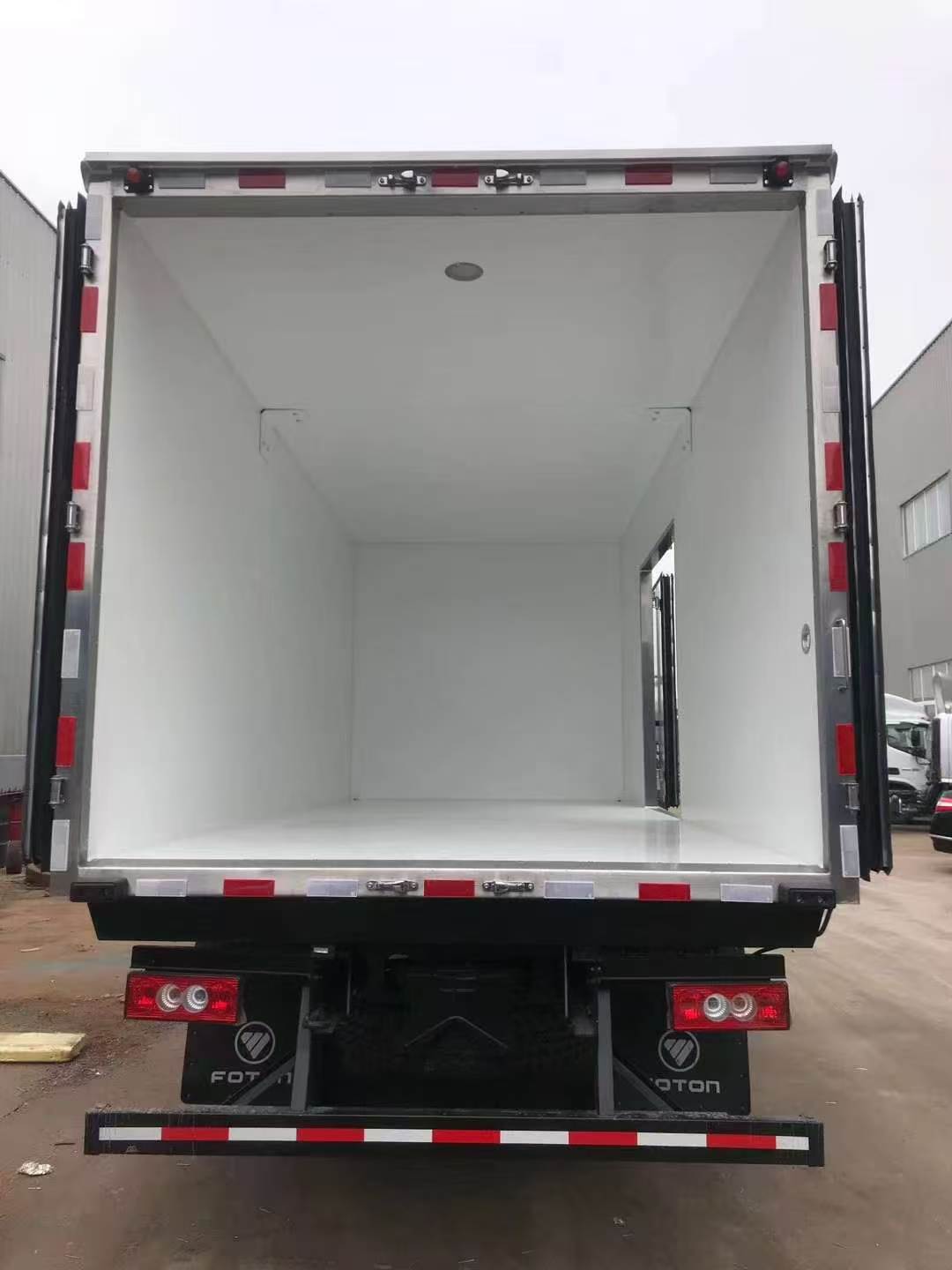
Transitioning into assembly operations requires a precise evaluation of physical infrastructure. The facility footprint matters heavily. Suitable SKD factory scale varies depending on vehicle model, assembly scope and local operational planning, with flexible space requirements to match different production volumes.
Equipment procurement focuses on assembly and verification. You must install heavy-duty hoists, alignment bays, and commercial brake testers. You completely avoid heavy machinery. There is no need to purchase welding robots or construct environmentally controlled paint booths. This lean setup makes SKD Vehicle Solutions highly attractive for new manufacturers. You maintain cash flow while building technical competency.
Freight density economics drive the strongest daily savings. Container loading capacity varies significantly based on vehicle specifications, disassembly standards and container packing solutions. Optimized SKD packaging greatly improves shipping efficiency compared with fully assembled CBU units, effectively cutting per-vehicle freight costs for bulk imports.
You must actively manage inventory and working capital. Lead times lengthen considerably. Sea freight and customs clearance for industrial parts can take an extended period depending on shipping routes and local customs efficiency. You need robust buffer stock. A single missing suspension bracket can halt your entire assembly line. This financial risk requires sophisticated inventory management software. You tie up working capital in transit, so accurate demand forecasting becomes mandatory.
Design a U-shaped assembly line to maximize space efficiency.
Install redundant pneumatic air compressors to prevent line downtime.
Maintain reasonable buffer stock of critical fasteners and specialized parts locally to ensure continuous assembly progress.
Customs authorities scrutinize knocked-down shipments aggressively. They apply strict regulatory lenses to define the boundary between SKD and CKD. If an SKD kit arrives too heavily assembled, customs may reclassify it as a CBU. They will immediately retro-apply maximum import tariffs. You must ensure your export partner follows the exact disassembly guidelines mandated by your local government.
Tiered duty structures vary widely across emerging markets. Governments use tax policies to force industrialization. Tariff rates for CBU, SKD and CKD vehicles differ drastically by country and regional trade policies. Importers need to match local tariff rules with assembly strategies to optimize landed costs effectively.
Meeting Local Value-Add (LVA) thresholds unlocks massive regional benefits. You cannot rely entirely on imported kits forever. Governments demand local content integration. You need distinct strategies for sourcing basic components locally. Common accessible local sourcing options include commercial tires, operating fluids, coolants, lubricants, and basic cargo structure components suitable for local processing.
Sourcing these items locally reduces your imported Bill of Materials (BOM) cost. It qualifies you for government manufacturing incentives. It also opens doors to lucrative public procurement tenders, which often mandate local content minimums.
Finally, leverage international trade agreements. Regional economic blocs offer massive advantages. The African Continental Free Trade Area (AfCFTA) and the Association of Southeast Asian Nations (ASEAN) frameworks are prime examples. By hitting local content minimums, your assembled trucks gain origin status. You can then export them to neighboring countries at zero duty. This strategy optimizes landed costs and radically expands your total addressable market.
Moving disassembled vehicles across oceans introduces severe packaging challenges. Dunnage engineering is often a hidden cost. You face a choice between specialized returnable racks and expendable packaging. Expendable packaging uses wood and heavy cardboard. It handles one-way trips but requires careful fumigation and disposal. Returnable steel racks protect heavy components perfectly. However, you must pay to ship empty racks back to the origin country. You must calculate the return-freight costs carefully.
Prolonged sea freight creates intense rust and corrosion risks. High humidity and salt air easily attack bare metal chassis components. You must insist your supplier uses Volatile Corrosion Inhibitor (VCI) bags. They must apply heavy protective waxes to all machined surfaces before containerization.
BOM accuracy dictates your operational survival. A missing fastener causes complete operational paralysis. You cannot finish a truck if a unique engine mount is absent. Relying on emergency air-freight to replace missing parts destroys your profit margins. You must enforce secondary kitting verification. The exporting factory must weigh and scan every single crate twice before export. Shortages are the leading cause of assembly failure.
Quality Assurance and warranty management generate significant friction. Who owns the warranty? Is it the OEM exporting the kit, or the local assembler? Usually, the OEM honors the warranty only if you follow their exact standard operating procedures. You must set up strict End-of-Line (EOL) testing standards. These must mirror the primary OEM factory tests perfectly. You will need a shower-test booth to check cab weather seals. You must run heavy dyno testing to verify brake balance and transmission shifts. Cutting corners on EOL testing guarantees high field-failure rates and destroys your brand reputation locally.
Skipping torque-wrench calibration, leading to loose chassis components.
Ignoring fluid flush protocols, leaving metal shavings in hydraulic lines.
Failing to document EOL test results per vehicle Identification Number (VIN).
Your success depends entirely on the capability of your upstream partners. You need a stringent evaluation framework for OEMs. Do not assume an excellent truck manufacturer knows how to ship a knocked-down kit. Shipping whole vehicles requires vastly different logistics expertise than packing thousands of loose parts into precise crates. You must ask for their proven experience in packaging engineering and KD shipment compliance for emerging markets.
You also need flexibility in BOM customization. Commercial vehicles require local market adaptations. A standard radiator will overheat in tropical climates. Standard suspension systems will fail on unpaved rural roads. Your OEM must willingly supply heavy-duty leaf springs, tropicalized cooling modules, and specialized fuel filters. If they refuse to alter the BOM, they are not the right partner.
Furthermore, secure reliable technical support mechanisms from your OEM partner. Professional on-site training, standardized translated SOP documents and systematic technical guidance are essential for smooth local assembly operations. On-site resident support arrangements can be discussed flexibly based on cooperation scale, project cycle and mutual confirmation, to match different local deployment needs.
You apply similar scrutiny to your logistics providers. Evaluate their specific track record in automotive inbound logistics. Moving standard consumer goods does not qualify them to move high-value automotive components. They must understand complex customs clearance codes for KD modules. Look for providers who operate sophisticated consolidation centers at the origin port. They can bundle components efficiently, maximizing container utilization.
Once you secure your partners, take measured next steps. Do not rush into mass production. Conduct a granular feasibility study comparing exact tariff savings against your facility CAPEX. If the numbers align, initiate a low-volume SKD Vehicle Solutions pilot program. Initiate a low-volume SKD pilot program to train your workforce, stress-test your logistics provider, and audit the OEM's packaging quality before large-scale deployment.
Transitioning to local assembly represents a fundamental shift in your business model, not just a minor logistical adjustment. It requires tight, continuous alignment between your tax strategy, supply chain management, and local labor capabilities. The initial hurdles of facility setup and packaging engineering are substantial. However, the long-term benefits of optimized ocean freight costs and rationalized customs duties create stable competitive advantages for vehicle importers and distributors in emerging markets.
We highly recommend starting with the SKD approach. It allows you to build local operational maturity safely. You protect your cash flow and master fundamental quality control before scaling into highly capital-intensive CKD environments. Validate your market demand first, train your technicians thoroughly, and strictly monitor your BOM accuracy.
The suitable SKD or CKD model depends on destination country policy, local assembly capability, order quantity, vehicle type and factory confirmation.
Q: What is the minimum annual volume required to justify an SKD assembly line?
A: The feasible volume for stable SKD assembly operations varies significantly, depending on vehicle category, local labor costs, facility investment, and the tariff gap between CBU and SKD imports in the target market. A customized annual volume plan is essential for accurate profitability assessment.
Q: Does SKD assembly void the original manufacturer's warranty?
A: No, provided you follow strict protocols. You must implement certified technician training and conduct audited End-of-Line (EOL) testing. OEMs maintain warranty validity only when local assemblers mirror the origin factory's exact quality standards.
Q: How long does it take to set up an SKD commercial vehicle facility?
A: SKD facility setup timelines vary based on land conditions, local approval processes, equipment scheduling and workforce training progress. A complete deployment cycle typically covers site preparation, facility renovation, equipment installation, license application and pre-production training before official pilot operations.
Q: What is the difference between SKD1 and SKD2?
A: These are industry sub-tiers indicating different disassembly levels. SKD1 typically involves a fully built, painted, and trimmed cab with simpler local assembly work. SKD2 requires more extensive local processing, including cab welding, painting and interior trimming based on customized KD packaging standards.
To recommend a suitable KAMA commercial vehicle solution, please share:
1. Destination country
2. Target model or vehicle type
3. Quantity
4. LHD or RHD requirement
5. Main usage scenario
6. Destination port
7. Fuel type or battery requirement
8. CBU, SKD or CKD preference
9. Company type: importer, distributor, fleet buyer or end user
KAMA can discuss configuration and packing plan discussion according to your confirmed cooperation needs and project conditions.


