Views: 0 Author: Site Editor Publish Time: 2026-07-23 Origin: Site
Logistics leaders face a tough tension today. They feel the strategic push toward fleet electrification. Yet, they must navigate the harsh operational realities of emerging markets. These regions present unstable grids, rough topography, and high price sensitivity. Evaluating an Electric Light Truck requires moving beyond standard. Success in developing regions hinges on hyper-local modeling and infrastructure readiness. Ignoring these localized factors often leads to stranded assets and failed pilot programs. This guide offers a pragmatic, evidence-based framework for shortlisting vehicles. You will learn how to evaluate core specs without falling for exaggerated range claims. We will show you exactly how to build a resilient delivery fleet tailored to challenging environments.
TCO supersedes sticker price: Initial acquisition costs are higher, but true ROI is determined by utilization rates, local electricity tariffs, and diesel parity timelines.
Spec for the worst-case scenario: Range and payload must be evaluated under maximum load, extreme local climates, and degraded road conditions, not ideal test-track metrics.
Battery chemistry matters: In high-temperature emerging markets, specific battery types (like LFP) often outlast traditional NMC batteries, despite weight trade-offs.
Infrastructure dictates the purchase: Procuring an Electric Light Truck without a parallel depot-charging and maintenance strategy guarantees deployment failure.
To succeed, you must first map your operational environment accurately. Fleet managers cannot rely on assumptions. You need to identify primary bottlenecks early in the planning phase. Grid instability stands out as a massive hurdle. Many regions experience rolling blackouts or brownouts. Furthermore, a severe lack of public fast-charging networks complicates daily routing. High ambient temperatures also degrade battery performance rapidly.
You must define the exact use case for your vehicles. Urban dense delivery requires different specifications than peri-urban or rural routes. City routes involve heavy stop-and-go traffic. This traffic benefits immensely from regenerative braking. Conversely, rural routes demand higher top speeds and robust suspension systems.
Establishing clear success criteria prevents moving goalposts later. Define what a successful pilot looks like before purchasing any vehicle. For example, your pilot might aim to match legacy route completion rates and maintain stable operational uptime under local working conditions.
We must also acknowledge the ongoing regulatory push. Local governments increasingly implement zero-emission zones. Many offer subsidies for New Energy Trucks. However, you should not rely entirely on volatile policy incentives. Subsidies can disappear overnight. Your operational model must stand on its own merits without artificial financial support.
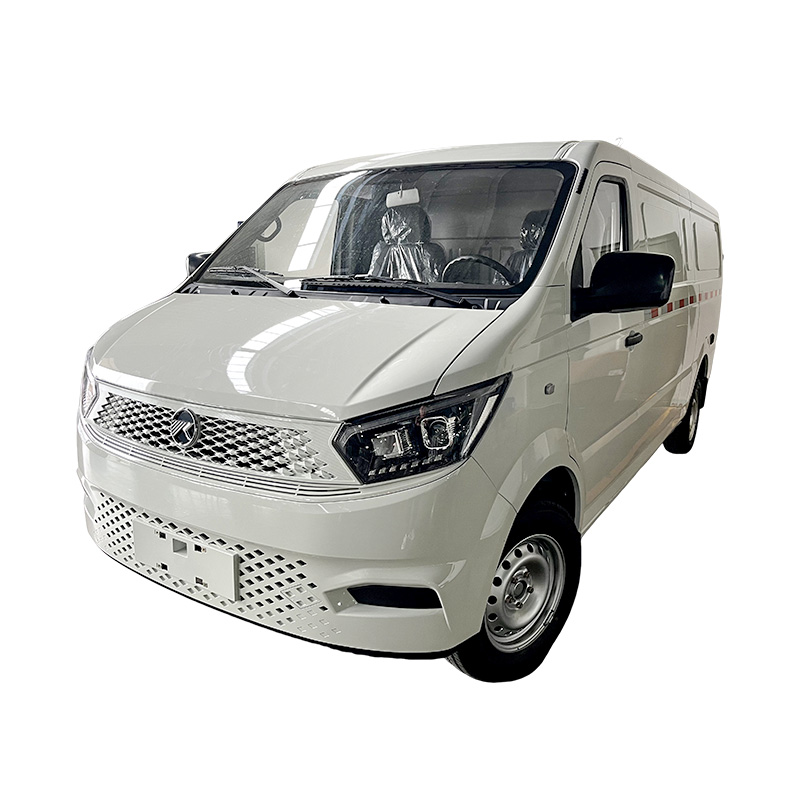
Evaluating commercial EVs requires a completely different mindset. You must scrutinize four vital engineering dimensions.
Physical limits dictate commercial viability. Heavier batteries inherently reduce your gross payload. An electric vehicle carries a massive battery pack. This pack consumes a significant portion of the Gross Vehicle Weight (GVW).
You need a strict decision framework here. Calculate the required "volumetric out-cube" versus "weigh-out" limits. These limits depend heavily on your specific cargo. Delivering heavy water jugs represents a "weigh-out" scenario. The cargo hits the weight limit long before filling the cargo box. Conversely, delivering light e-commerce parcels represents a "volumetric out-cube" scenario. You run out of physical space before hitting the weight limit.
Common Mistake: Many fleet operators purchase the longest-range battery available. They fail to realize this drastically reduces payload capacity. You end up carrying dead weight instead of profitable cargo.
Never trust ideal test-track metrics. You must aggressively discount the OEM stated range. Real-world conditions destroy ideal range estimates quickly.
Multiple on-site factors impact actual driving range. Hot climates and frequent air conditioning usage, stop-and-go traffic, and maximum payload weights may reduce range depending on climate and operation. Always look for vehicles featuring adjustable regenerative braking configurations. These systems recover kinetic energy during deceleration. They prove highly beneficial for local topographies featuring steep descents or heavy urban congestion.
Battery chemistry dictates your vehicle lifespan. You will primarily compare LFP (Lithium Iron Phosphate) and NMC (Nickel Manganese Cobalt) batteries. LFP batteries are often preferred for many hot-climate commercial applications in emerging markets. They possess higher thermal runaway thresholds. This makes them significantly safer in extreme heat. LFP batteries also deliver longer degradation cycles under high thermal stress. They handle daily 100% charging better than NMC variants.
Thermal management systems matter just as much. You must evaluate active liquid cooling systems versus passive air cooling. Active liquid cooling pumps coolant through the battery pack. This stabilizes cell temperatures during fast charging or high-speed driving. Passive air cooling simply relies on ambient air flow. Passive cooling often proves grossly insufficient in tropical or arid climates. It leads to rapid battery degradation and shortened operational lifespans.
| Specification | LFP (Lithium Iron Phosphate) | NMC (Nickel Manganese Cobalt) |
|---|---|---|
| Thermal Stability | Excellent in high heat | Moderate to good |
| Degradation Cycle | High (Longer lifespan) | Lower (Shorter lifespan) |
| Cooling Requirement | Liquid cooling preferred | Strict liquid cooling mandatory |
| Emerging Market Fit | Highly Recommended | Less Optimal |
Road quality varies wildly in developing regions. You must assess suspension setups carefully. Non-macadamized or pothole-heavy roads destroy weak chassis frames. Inspect the leaf springs and shock absorbers. Ensure they match your maximum anticipated load.
Unsprung weight presents a unique challenge. Electric axles and hub motors add significant mass to the wheels. This unsprung weight impacts ride quality and suspension durability. Insufficient ground clearance will damage underbody battery packs.
Best Practice: Always request a fully loaded test drive over your worst local route. Observe exactly how the suspension handles potholes when carrying maximum payload.
Deploying commercial EVs involves massive operational shifts. The vehicle itself represents only one part of the equation.
You must decide between depot charging and decentralized charging. Decentralized charging relies on public networks. This rarely works in emerging markets. Public chargers suffer from poor maintenance and frequent downtime. Therefore, fleet owners must self-fund their charging hubs.
You generally install Level 2 AC depot chargers or localized DC fast chargers. Level 2 chargers work perfectly for overnight dwell times. They cost less and stress the local grid less.
Grid assessment becomes a mandatory first step. You must evaluate facility power limits immediately. Many depots lack the incoming amperage to support twenty charging vehicles. You might face rolling brownouts. In these cases, consider micro-grids or solar offsets. These supplementary power sources manage peak loads. They ensure your vehicles charge even when the local utility grid fails.
What to watch out for: Utilities often take months to upgrade transformers. You must initiate grid expansion discussions long before your vehicles arrive.
Beware the danger of orphan vehicles. Many new manufacturers enter the market and quickly vanish. This leaves you with unsupported hardware. Always evaluate vendor presence in the local market. Do they have a regional parts warehouse? Do they employ certified high-voltage technicians locally?
KAMA can discuss spare parts planning, technical documents, maintenance guidance and after-sales support according to the confirmed model, order quantity and cooperation plan.
Drivers dictate the success of your electric rollout. They need comprehensive training requirements. Driving an Electric Light Truck differs drastically from driving a diesel van. Drivers must learn how to maximize regenerative braking. Proper technique extends daily range significantly.
Security remains a prominent concern. High-value battery packs attract theft. You must mitigate these risks through secure depot parking and robust software locks.
Furthermore, ensure your telematics platforms function reliably. These systems track vehicle location, state of charge, and driver behavior. They must operate flawlessly on local cellular networks. Poor connectivity creates blind spots in your daily routing dashboard.
You need a structured approach to finalize your procurement. Never rush into a massive order based on a glossy brochure. You must validate claims through rigorous field testing.
Follow these critical steps for a successful rollout:
Define exact route constraints and payload requirements.
Audit your depot electrical capacity with certified engineers.
Deploy a limited pilot fleet on predictable routes.
Analyze real-world energy consumption data thoroughly.
Scale deployment based on verified operational data.
Never commit to a full fleet replacement initially. This approach invites catastrophic operational failure. Instead, start with a limited proof-of-concept (POC). Deploy a small batch of vehicles on well-documented routes. Choose routes where you already understand the exact mileage and elevation changes. This controlled environment allows you to measure true energy consumption. It provides a baseline to judge vehicle performance accurately.
Hold your potential vehicle manufacturers accountable. Ask difficult questions during the procurement phase. Do not accept marketing jargon as technical proof.
Request anonymized telematics data from similar climates and markets to verify vehicle performance under extreme heat conditions.
Scrutinize the fine print on battery degradation warranties. Do not accept vague promises.
Examine the required maintenance schedule. Ensure professional technical support and accessible software update solutions are available for local operation scenarios.
Do not issue a Request for Proposal (RFP) to truck manufacturers yet. First, conduct a comprehensive site energy audit at your primary depot. Hire an electrical engineer to measure your spare power capacity. Understand exactly how many kilowatts you can draw during peak night hours. This single piece of data dictates your charging hardware choices. It ultimately determines how many vehicles you can safely deploy.
Transitioning to electric delivery fleets in emerging regions requires meticulous planning. It represents a complex infrastructure play, not just a simple vehicle procurement exercise. You must evaluate the entire ecosystem surrounding the vehicle.
Here are your crucial next steps:
Prioritize reliable OEM support networks to avoid stranded assets.
Demand proven battery thermal management systems suitable for extreme heat.
Start with a small, heavily monitored pilot program on predictable routes.
Assess your local grid capacity before finalizing any vehicle purchases.
Success demands moving cautiously. By focusing on infrastructure readiness and real-world range, you can deploy a reliable, emission-free delivery network.
Q: How much does payload capacity drop when switching from diesel to an electric light truck?
A: Payload capacity varies when switching from diesel to electric light trucks, depending on the specific battery configuration, vehicle model and GVW design. The battery pack contributes additional weight, which will affect the available cargo payload. Always verify local Gross Vehicle Weight compliance rules before procurement.
Q: What is the realistic lifespan of an EV battery in high-temperature climates?
A: EV battery service life in high-temperature regions varies significantly, depending on battery chemistry, thermal management system quality, daily charging habits and local climate conditions. Vehicles equipped with premium LFP batteries and active liquid cooling systems deliver more stable performance and longer service cycles in hot environments compared with basic passive cooling configurations.
Q: Do new energy trucks require special tires?
A: EV light trucks feature heavier curb weight and responsive instant torque compared with traditional diesel vehicles. Custom EV-specific tires are highly recommended, as they are better optimized to adapt to the unique operating characteristics of electric commercial vehicles and deliver more durable performance in daily delivery scenarios.
Q: Can we charge electric delivery trucks on a standard commercial grid in developing regions?
A: Level 2 overnight charging is usually feasible on existing grids. However, scaling a large fleet requires a comprehensive facility load study. Installing DC fast charging infrastructure almost always necessitates costly transformer upgrades and advanced energy management systems
To recommend a suitable KAMA commercial vehicle solution, please share:
1. Destination country
2. Target model or vehicle type
3. Quantity
4. LHD or RHD requirement
5. Main usage scenario
6. Destination port
7. Fuel type or battery requirement
8. CBU, SKD or CKD preference
9. Company type: importer, distributor, fleet buyer or end user


