Views: 0 Author: Site Editor Publish Time: 2026-10-21 Origin: Site
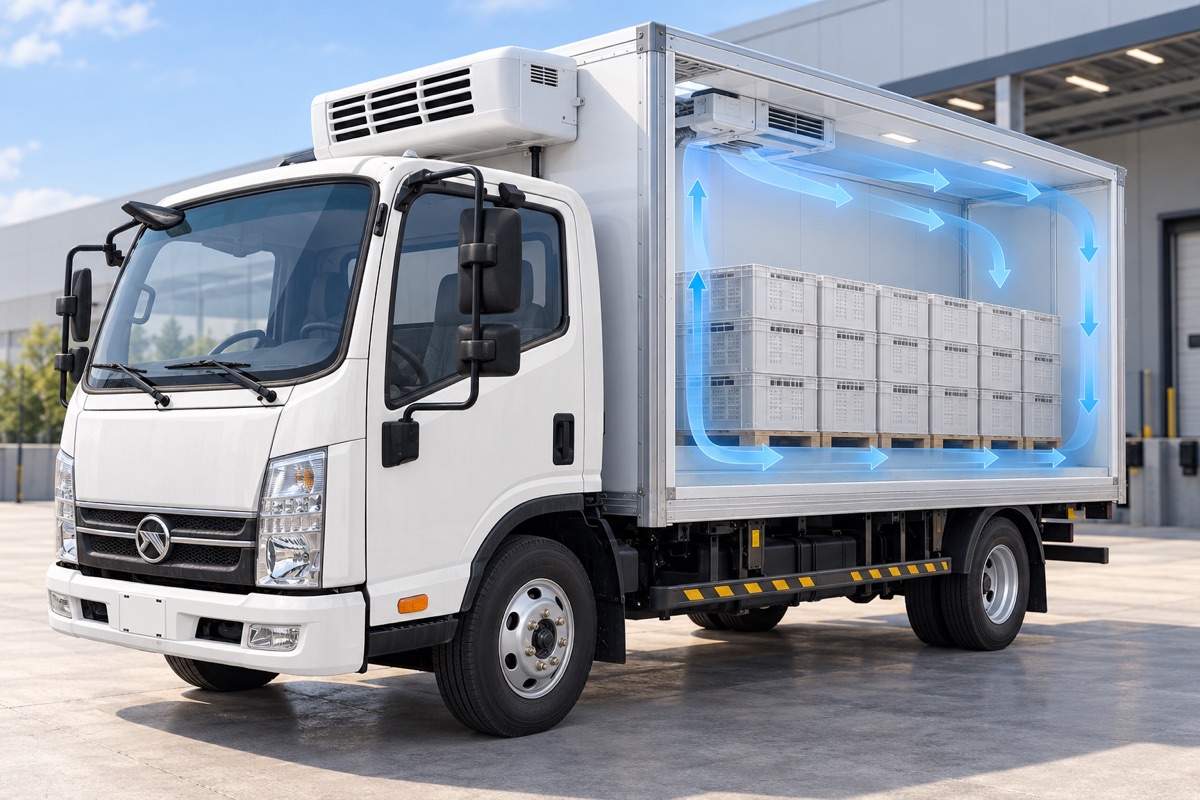
AI-generated conceptual illustration using a KAMA cab reference. Refrigeration equipment, body cutaway and airflow are illustrative; this is not a delivered vehicle or an engineering drawing.
A refrigerated truck combines an insulated cargo body with a refrigeration system that removes heat from the load space. Its ability to protect a shipment depends on the complete arrangement: the cooling unit, body, power supply, loading pattern and delivery schedule. For a fleet buyer, the practical question is whether that arrangement works throughout the intended route, including stops.
This guide explains the operating principles and turns them into questions to ask before approving a vehicle configuration.
In a conventional vapour-compression system, refrigerant circulates through a compressor, condenser, expansion device and evaporator. It absorbs heat at the evaporator inside the cargo compartment and releases heat through the condenser outside. Fans move air across these components and around the cargo space. Insulation reduces heat entering through the body, while seals help limit leakage.
That is why an insulated box alone and an actively refrigerated body are different. The insulation slows heat transfer; the powered refrigeration system removes heat. Thermo King’s truck and van guide explains the basic cooling cycle and the distinction between ordinary cargo bodies and refrigerated vehicles.
Ask for the proposed unit’s power arrangement rather than assuming that every reefer works the same way. Vehicle-driven units depend on a vehicle power source. Other systems use an independent engine, electrical supply or battery arrangement. Standby operation while parked is a separate capability to confirm.
| Operating situation | Question for the supplier |
|---|---|
| Driving between deliveries | What powers the refrigeration unit, and what operating conditions affect its output? |
| Waiting with the vehicle switched off | Can cooling continue, for how long under the specified conditions, and from which source? |
| Preparing at the depot | Is external standby supported, and what connection and electrical supply are required? |
| Battery-electric operation | How is refrigeration energy accounted for in the route and recharge assessment? |
A battery capacity or a chassis driving-range figure does not answer these questions. Request a configuration-specific explanation covering both vehicle movement and auxiliary operation.
The setpoint is a control setting. A sensor reports temperature at its own location; it does not directly establish the temperature of every item in the load. A dashboard display therefore needs context: which sensor is shown, where it is installed and how the shipment is monitored.
For procurement, record the cargo owner’s required conditions and the proposed monitoring method separately. Ask how sensors, records and alarms will be provided. Do not choose one universal temperature for different commodities or treat a display reaching the setpoint as proof that a loaded route has passed.
Blocked air paths, damaged seals and a poorly prepared compartment can undermine an otherwise suitable refrigeration unit. Load layout must leave the air circulation paths specified by the equipment supplier clear.
The Thermo King V-520 operator’s manual, Loading and Enroute Inspections, illustrates the importance of checking the body and seals, pre-cooling the compartment, loading goods at the required temperature and maintaining airflow. It describes that unit as maintaining a correctly prepared load’s temperature, rather than cooling an above-temperature load. Use the instructions for the actual equipment supplied; timings and operating procedures from another unit are not interchangeable.
Before committing to a fleet configuration, agree on a representative trial brief with the supplier. The following worksheet is a procurement proposal, not a claim that a KAMA vehicle has already passed a test.
| Trial stage | What to agree and record |
|---|---|
| Identify the build | Chassis, completed body, refrigeration unit, power arrangement and installed accessories. |
| Define the job | Cargo and packaging, agreed handling conditions, load layout, route, stops and expected environment. |
| Prepare the vehicle | Starting conditions, cargo preparation, sensor locations and the applicable equipment procedure. |
| Run the route | Departure and arrival times, door openings, operating modes, temperature records and energy use where measurable. |
| Review exceptions | Any excursion or alarm, what happened at that time, the corrective action and whether another trial is needed. |
| Approve the configuration | Written acceptance criteria, evidence reviewed, unresolved items and the exact build to which approval applies. |
Include a realistic delivery sequence rather than assessing only an empty, closed box. If the intended work includes long waits, frequent unloading or parked operation, put those conditions in the brief. Agree the acceptance criteria before testing so both parties assess the same job.
The insulated body, refrigeration equipment and accessories are part of the delivered vehicle. Request the completed-build weight and loading information, door clearances and cargo layout before deciding whether the vehicle can carry the intended shipment. For body selection, see our separate flatbed, box and refrigerated body comparison.
A repeat order should identify the same approved configuration and any changes since the trial. A different cooling unit, body layout or operating schedule needs its own review rather than inheriting an earlier result automatically.
For a refrigerated vehicle project, send your destination country, cargo and packaging, required handling conditions, working load, route and stop pattern, parked-operation needs and intended fleet quantity. Include the information you already have and identify what still needs technical confirmation.
Contact KAMA with your operating brief so the proposed chassis, body and refrigeration arrangement can be reviewed together. Final equipment, performance and destination-market requirements must be confirmed for the offered build.